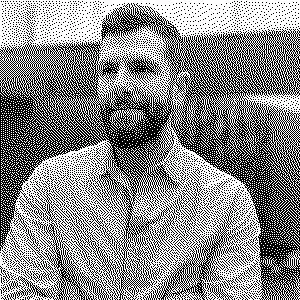
George Chasiotis is the founder of Minuttia, one of the best-known content strategy agencies in the B2B SaaS space, and someone who has built a public reputation as one of the sharpest organic growth minds around. In this conversation, he strips all of that back.
What George describes — with unusual honesty — is a version of ambition most high performers will recognise but rarely say out loud: drive that was never really about vision, but about not going back. Not going back to a specific feeling, a specific fear, a specific version of life that he spent years outrunning.
This is a conversation about what it actually costs to build something from that place and what it takes to start asking whether there might be another way.
Tune in to hear about:
- The single force George credits with both everything he's built and everything he might have missed — and why he still can't fully separate the two
- What losing a significant chunk of revenue in a matter of weeks revealed about the true weight of running a business alone
- The period in George's life before Minuttia that he describes as a black period — and what got him through it
- Why having a support network of people who love you can still leave you completely alone with the hardest parts
- The childhood dynamic that shaped how George reacts to financial pressure, conflict, and uncertainty — and how he's trying to unlearn it in real time
- The question Aggelos asks at the end of the conversation that stops George mid-sentence and forces a more honest answer
Full transcript
Aggelos: A lot of people mostly know you as the CEO of Minuttia and one of the top content strategists out there — or should I call it organic demand, organic marketing experts. Aside from all that, from companies, from jobs, who are you?
George: I guess I will go deep even from the first question. If you strip away everything — which kind of explains my journey so far, the decisions I'm making, the mental models I'm using — I would say that I am a child from a Greek middle-class family where money was always an issue, and that child grew up with little to no built-in confidence. And is still, you know, fighting for survival. The key word here is survival. Because to a certain extent, the need — the race — to survive is kind of the driver behind everything I'm doing.
Aggelos: Do you have siblings? Can you tell me a little more about the overall family?
George: Yeah, I have a sister — thank God, and I mean that very practically. In many phases of my life I was lost and in need of help, and my sister served as this vehicle I would jump on to make it to the next stop. Of course, after a certain point, even though I still need her help, I don't need her as much. But I have a sister, and the rest is a pretty normal family setting.
Aggelos: This need for survival that you mentioned — how do you think it reflects in the current version of you?
George: Six years ago I launched Minuttia, which is still around and doing better as we head into 2026. I don't want to go back before that on the timeline, because the phases before that were even more driven by the need for survival.
Agencies are in most cases cash-flowing businesses, and this is both a good and a bad thing. It's kind of a trap — you see money flowing in, more money than you've ever seen in your life up to that point, and that becomes the trap. Because you think: okay, survival is kind of fixed. Why would I need to do something bigger than that?
I was always in this fear of: I will fail, and failure may mean I have to go back to having two euros to spend the weekend. I'm always in that state of not wanting to go back to that. And so many of my decisions were not so much about vision — about building something big, having a big impact — they were mostly focused on: I don't want to go back to spending the weekend with two euros in my pocket.
The agency was, or is, an expression of that. And this fear — this feeling that I need to survive — permeates pretty much every aspect of your life and, as an extension, every business decision you make. From what you build, to how you talk to your clients, to not firing a client you should fire. Does that make sense?
Aggelos: Absolutely. And I can even relate personally. But I wanted to ask — how do you experience the present when you're holding this stress?
George: Nowadays I can't say I'm as stressed as I used to be. Survival isn't solved — at least not in my worldview, not in my mind — but I'm closer. The biggest thing for me right now is to try to understand, in everything I'm doing or want to do, whether something is ingrained in me based on my upbringing and leads ultimately to the need for survival — or whether it's something original. Something that's just George, and so I should go after it.
An example is business. Building a business is so hard that if you're going to do it, it better be for building something big. And that's one of the reasons why I've kind of hit pause from launching businesses — because I want the next thing, if there is a next thing, to be something original, not based on the need for survival. I want it to be something I really like, something that is my way to have a real impact and build something big.
Aggelos: It seems that this need for survival has also benefited you. I'd like to hear both sides — how it benefited you and how it backfired.
George: The upside is that you're driven. You need to survive, so you do things. Had it not been for that, there would be no Minuttia. I wouldn't be as active on LinkedIn, which now gives me opportunities and optionality. So it put me in a better position.
But the downside — honestly, I can't quantify it. Because had it not been for the need for survival, maybe I would have been okay going all in on some big, bold idea and building something really large. The outcome might have been failure — which is fine. But at least I would have failed trying to build something big, not trying to build something small that was designed just to alleviate my fear of survival.
The upside I experience every day, and it's great — I don't take it for granted. The downside I can't even quantify because I don't know where I could have been.
Aggelos: Ultimately it's part of your identity now. We tend to build traits on top of such core feelings, and then it's very hard to separate who you are from who you would have been without them.
George: Yeah, exactly.
Aggelos: Let's go back to Minuttia. You started in January 2020, a couple of months before COVID took the world by storm. By now, which parts of the role could you do well but have disconnected from — things you no longer identify with?
George: Let me preface this by saying that I'm generally very modest in the way I communicate about myself. But at the same time, I know that I'm really, really good at what I do. Having said that, the realities of running a business hit you hard.
Over the past couple of years — specifically in 2024, within a timeframe of a few weeks — Minuttia lost nine clients, accounting for around $55k in monthly recurring revenue. After many years of trying to survive and make sense of everything while also growing personally, all these things took a toll on me. Even though I'm really good at the growth-related work, the realities of running a business pushed me to the question: do I really want to do this anymore?
Where I've landed after all of this, now that I have the headspace to think through it, is that I ultimately like owning businesses and not having to run them. Having to run a business while working in the business is super hard. Especially an agency. And it's even harder for small agencies, because with a bigger agency you have the people and can delegate more. With a small one, everything comes back to you — especially the bad things.
I really like the game of entrepreneurship and owning businesses. But running a business while working in it — that's not my thing. And that situation pushed me to question whether I even liked the industry, the things I know and am passionate about. I think I'm really, really good at what I do. But the model I applied — running the business while working in it — did not serve me, and at some point became too heavy to carry.
Aggelos: A lot of people like you get their dopamine hit from building, not necessarily from running what they've built — working on big ideas, building the initial stage. Then the day-to-day operations become brutal. With an agency, 50% is the service you're giving and the other 50% is literally the hunger games — who stays alive at the end.
George: Yeah. Yeah, it's tough.
Aggelos: When you were running your agency, were there times you felt alone — even when fully surrounded by people?
George: The times I would feel most alone would be: first, when I made a sprint — pushed hard to achieve a certain goal — and felt the outcome wasn't equal to the input. Second, when I was financially stressed and running all those internal calculations in my head. And third, when I had people issues.
I should mention — nowadays I'm not running Minuttia actively. I have a managing director who is really capable. But back when I was running it, people issues were very heavy on me. I've since parted ways with some people I should have parted with years ago, and it was a great relief.
I've also changed. My amplitude of feelings is still there, but it's not as high at the highs or as low at the lows. So those three things — when the outcome felt unequal to the effort, when I had financial stress, when I had people issues.
Aggelos: If you could have had any type of help at those stages, what would you have consciously asked for?
George: Some sort of coaching or therapy, because the underlying issues in most cases are emotional. We are humans — we run on emotions. Coaching or therapy would have been my first shelter.
Aggelos: For what, though? To help you achieve what differently?
George: Sanity. Just to talk it out, get an opinion, a sanity check, or direction, or just friendly advice in other cases.
Aggelos: At that stage, was there anyone you could be completely vulnerable with — share doubts, be completely honest with?
George: My sister, who was with the company and still is in some capacity. My wife. My close friends, which has changed a lot throughout the years. And for me — God.
Aggelos: A lot of people I talk with describe a support network like the one you described, but in many cases it doesn't really get what they're going through. In your case, was it different?
George: No, it's not different. At the end of the day — and this applies to pretty much everything in life — you may have someone next to you, but it's you who has to get up in the morning, go to the gym, break a sweat, do the difficult thing. You have all these people, yes, but the effort is yours. You're alone when it comes to putting in the work. That's how I perceive it.
And by the way, I didn't choose the example of going to the gym randomly — I've been through depression, and getting out of bed to go to the gym was the biggest thing I could possibly do. Gradually you see: I did it today, I did it yesterday, I'll do it tomorrow. You build up confidence, and things that were terrifying six months ago are no longer as scary.
The same applies to business. In the end you are alone. You have all these people and they will support you — I have many people, I've made many good friends in this industry and I'm grateful for that. I'll ask opinions, seek advice, get on calls. But if I have to have a difficult conversation, or process payroll at the beginning of the month — they're not going to do it for me.
Aggelos: The situation you described — the depression — did that happen while running your agency?
George: No, that was before. Before Minuttia. It was a black period, and it was multi-dimensional. It's not usually any one thing. It was a gradual climb back out.
Aggelos: Did you have any professional support during that time?
George: Yes, I saw a therapist, even though briefly. And that helped, again. But I think very often we are looking for the solution in someone else, in any one thing. And I really believe that the problem and the solution is us — it's inside us.
I had this therapist, yes. But had I not also got up in the morning to go to the gym, day after day, fixed my broken relationships, tried harder with my friends, gone out and socialised — if I hadn't done all those small things, and it's only you who can do those things, then how do you expect to get out of it?
I may be overstepping, and I'm speaking purely from my own experience. But I think very often we try to find the solution to our problems in someone else. I've rarely found that to be the case. The solution is you — and what you do on a daily basis to help yourself, with all these other people and mechanisms around you as support. Not as the solution.
Aggelos: You're raising two very interesting points — the client who comes to therapy ultimately seeking the therapist to save them, and the client who comes to therapy to tick the box. But I'd add something. Sometimes the therapist can be the person who gives you the push when you're deep in a black hole. I do fundamentally agree with you though on a different level: you can't really gauge the magnitude of a challenge if you don't make some critical interventions in your life first. If you're not exercising, not eating well, not doing the basic things — you will bring an amplified version of your problem to the therapist. You're not knowing the real weight of it unless you do those critical things first.
George: Yes, I agree. I agree completely.
Aggelos: Let's talk about what shaped you into the person you are today. You mentioned you grew up in a household where money was difficult. What other things — from your household, a parent, a friend — shaped who you are? Have you decoded what from the past has made you?
George: Not all of it. It's a work in progress. Maybe the fact that my mother was demanding things, especially around school — which was a huge burden because I didn't like school and disagreed with it. That may have shaped me in some way.
But going back to what I was saying earlier, one of the things I'm consciously trying to do now is to understand my own reactions. When I react to something — is this 10-year-old George? Or is it 36-year-old George who knows his stuff, who has built things, who goes to the gym every day, who wants to achieve even bigger things? It's always a struggle to trace a reaction or a thought back to its source.
I find it exciting and fascinating, though — to understand how many of my behaviours and reactions today are being pulled from the past and are not really representative of who I am and who I want to be now.
Aggelos: Can you give me a couple of examples?
George: So my son is sick right now — he has a fever. And I remember exactly how I felt when I didn't want to go to school. He's taken my character almost copy-paste. And I sympathise when he says he doesn't want to go. That's 10-year-old me in play right there — not George who is a father and wants his child to do the things they need to do.
Another example is the reaction to bad financial news. In the past I would overreact, because that was the default reaction to financial news in our household. My parents did the best they could — I'm not saying otherwise. But either you like it or not, some of this baggage you carry with you. My focus is on identifying which of these are actually mine and which I've just inherited and been carrying. And at least making them a little lighter — taking some of the clothes out of the suitcase so it's not as heavy.
Aggelos: If you could speak to yourself in a past state — and I intentionally won't tell you which version — what would you advise to younger George? And how young is he?
George: First, I would advise him to buy Bitcoin — then we probably wouldn't even need this conversation. No, seriously: around 18 years old, I would tell him: leave Greece. Step one, leave Greece. Do your studies, get a job, any job to start with. Work your way up in a big company, get the experience, the logo, the social proof. And then go build something — but if you take that route, it better be something big. Because it's not worth putting your time, energy, and all the difficulties of building a business into something that's not going to be big, or at least has the potential to be. The opportunity cost — and as I said, I can't quantify it — might be beyond something I can even comprehend today. So the opportunity level in what you build has to be as high as possible. And if you fail, at least you failed trying to build something big.
Aggelos: I want to challenge you a little here — you meet yourself at 18 and you only talk to him about what job to get and what business to build. You have that unique opportunity...
George: You're right, I'm sorry — I framed it that way because I thought this was a professional context. But beyond that: exercise, eat well, have friends around you, love people, give as much as you can because when you give you get back. I wouldn't change many things, honestly.
Aggelos: Is there a big difference between 18-year-old George and today?
George: Yes, for sure. Confidence, first. Going through adversity leaves a mark on you — there are bad things that come with that, but also good ones. You have a thicker skin. Things that used to lose me sleep, especially around people issues, now feel like patterns I've seen before. I've been here, I know it's going to be fine.
The same with financial stress. I don't perceive it the same way anymore. Not because I'm at a different level, but because I know it's going to be difficult for a while and then it's going to be alright. So: confidence, for sure. And a deeper interest in understanding myself — what dictates my thoughts, my behaviour, my reactions.
Aggelos: I want to ask you one last thing. You mentioned the word "fail" a few times in this conversation. Not as a therapist, just as Aggelos — do you feel like you failed?
George: Did I say fail? In what context? No, I don't think... Look, in realising the vision I had for the company when I started — yes, I haven't reached that. But it may also be that that wasn't the right vision in the first place.
The company is here. It has given a lot to a lot of people — it allowed people to launch their careers, and I'm not exaggerating. It's given me so many things and it's still around and doing really well after a tough couple of years. Maybe my original vision hasn't materialised yet — because the company is still here, and 2026 has started well. Many great things came out of it.
And maybe the framing of failure isn't right. An agency for B2B SaaS companies — the opportunity level is what, a three or four out of ten? As big as that three or four can be. But it's a net positive.
Aggelos: I fundamentally disagree — not as a therapist, just as Aggelos. You started a business, you traveled for almost two years across 14 or 15 countries with your wife and son, you made money, you gained resellable experience. What you're describing sounds like the typical high achiever with extensive expectations of themselves — a very specific vision, and if it deviates from that, I failed. But objectively? You succeeded.
George: No, I get what you mean, and I didn't want it to come across that way. It's a net positive, for sure. Net positive. Maybe the framing of failure was just not right.
But ultimately that's also part of the story — because by nature I push for more. I'm not easily satisfied. I want to see things through to their full potential. That applies to companies, to projects, and also to people. I want people — and things I'm involved in — to realise their full potential.
Aggelos: Wanting something — being conscious that you want it and confident you can get it — is a great thing. The challenge starts when we stop having fun in the process, or when we are driven by things like the need for survival, or something inherited. Are you planning to have more fun? Did you stop having fun with Minuttia?
George: Yeah, it definitely stopped being fun. Around 2024, maybe even earlier. Partly because I overdid it — my wife gave birth to our son, and I left the hospital at 3 or 4 in the morning, went home to sleep, came back to the hospital to see them, and then went to work. I didn't even take paternity leave. When you go that hardcore into something and it also doesn't become the thing you initially envisioned, there's some sort of disappointment and bitterness. Not failure — but disappointment.
And after a certain point, the thing becomes heavy. My limits are different from anyone else's, but after a certain point, yes, I stopped having fun. And I'm in the process now of finding the thing that will make me not just do something because I have to for survival, but because I'm genuinely pumped — because I'm building something big. When you find that, it's the best thing. Because it's not just about surviving. It's doing it because you're building something big, having fun, being blessed with the opportunity, having impact on a lot of people. And if you have that, chances are the money will follow. So survival gets checked along the way.
Aggelos: Giorgio, thank you very much for that.
George: Thank you.